
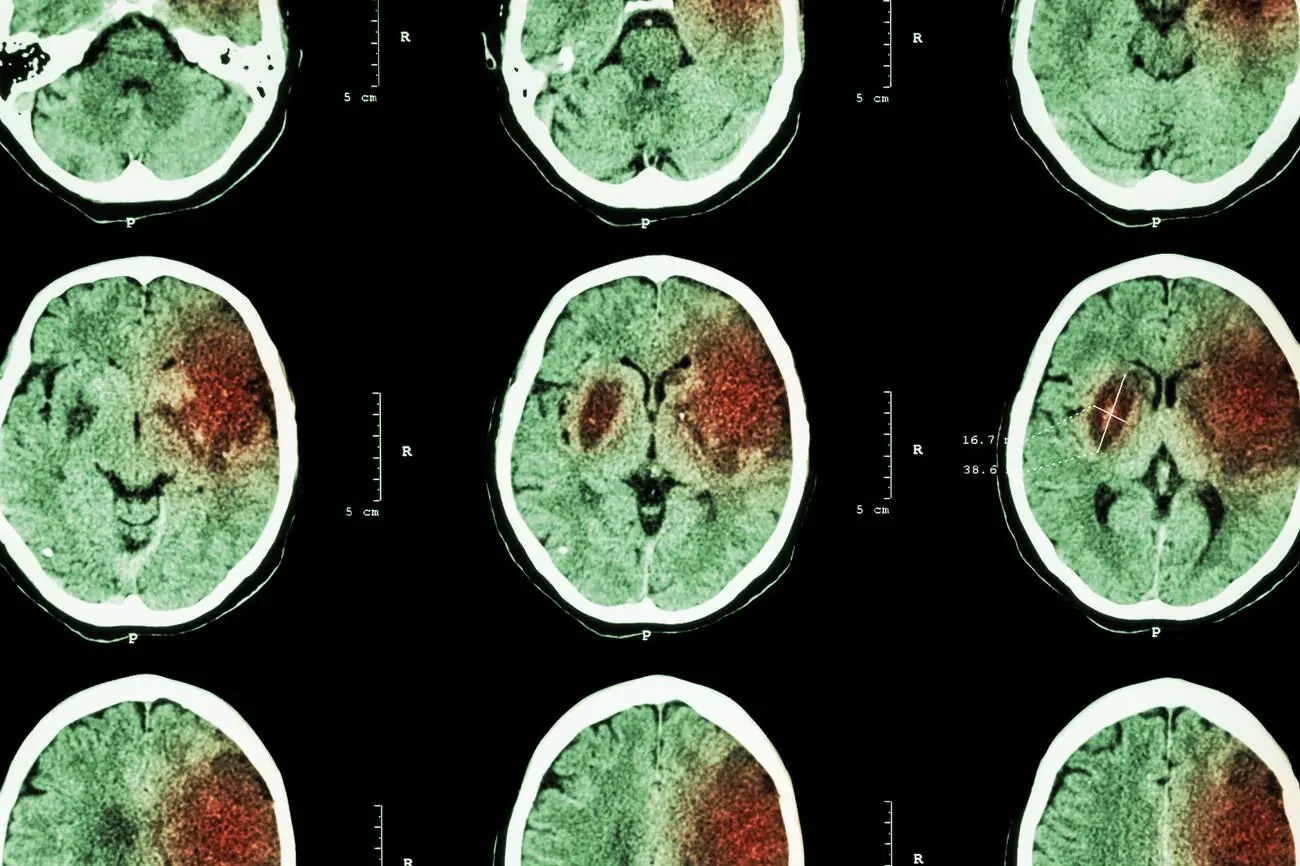
Bulgaria recorded 26,758 strokes between January and July 2026, or one every 11 minutes. Prof. Dimitar Maslarov, a board member of the Brain Health Council Foundation, presented the National Health Insurance Fund (NZOK) figures at a round table held by the foundation.
This article follows our earlier report on the "iStroke-BG" online calculator, which estimates the five-year risk of ischaemic stroke. The foundation also presented the calculator at the round table.
The forum, titled "Artificial intelligence and stroke – from the first minutes to a new life", was held ahead of World Stroke Day on 29 October. It covered the cost of stroke for patients, society and the health system, the use of artificial intelligence after prevention and during the stroke itself, and new ways of providing care.
Yearly cases have fallen from 51,986 in 2016 to 43,006 in 2025. Maslarov expressed "moderate optimism", because the clinical pathway covers more than acute strokes. He said the efforts are paying off, and pointed to the new clinical pathway for transient ischaemic attack, which starts this year.
Arkadi Sharkov, also a board member of the foundation, presented a study that drew on data from Eurostat, NZOK, the National Centre of Public Health and Analyses, the National Health Information System, the National Statistical Institute and the National Social Security Institute, along with the foundation's own calculations. Cerebrovascular disease causes one in six deaths in Bulgaria, four times the EU average. Seven in ten people who die of stroke are men.
Sharkov said stroke also affects people of working age: one in four people admitted to hospital with an acute stroke is between 18 and 64. The most common diagnoses in decisions by the medical expert commissions (TELK) are the after-effects of stroke.
Cerebrovascular disease costs the health fund, households and the economy a total of €472m a year. The fund pays 15%, households 32% and the economy 52%. Patients themselves pay 78% of the cost of medicines after a stroke, the highest share among common diseases.
Assoc. Prof. Nikolay Velinov, head of the adult neurosurgery department at the Pirogov emergency hospital, explained the role of artificial intelligence during a stroke. He said organising the treatment of ischaemic stroke is the hardest part, because a long diagnostic process comes before the patient reaches the treatment room. On average, 311 minutes pass before treatment starts.
Patients do not reach the operating room in time because of the long transfer from the referring hospital to the interventional centre, slow step-by-step identification and triage, and a delayed "door-to-puncture" time. In hospitals that use AI software, that time is 23% shorter, hospital stays are shorter and access to care is wider.
Maslarov added that a stroke does not begin in the hospital. He said the test of success is not how many procedures are done, but how many patients get access in time and what the outcome is. He also said there are differences between regions, depending on where people live. The aim is less disability, preserved cognitive health, active longevity and a lighter burden on families and the system.
Maslarov's single strategy has three levels. Before a stroke come early prevention, education and risk control. During a stroke come the 112 emergency line and triage, remote help with artificial intelligence, and special teams. After it come rehabilitation, follow-up at home and long-term prevention. The solution he proposes is a digital network with shared protocols, transport and specialist teams in six steps: primary prevention, recognition, diagnosis, treatment, recovery and monitoring.
Under the national programme for ischaemic stroke, six specialised high-tech centres with modern equipment are due to be built, three in Sofia and one each in Pleven, Plovdiv and Varna. Seventeen regional hospitals will get specialised equipment and a single digital platform.
Berlin was cited as an example, where three ambulances, each worth 1m, carry a mini scanner. With artificial intelligence, they diagnose the patient in the ambulance itself, so treatment can begin there.


Comments (0)
No comments yet.