
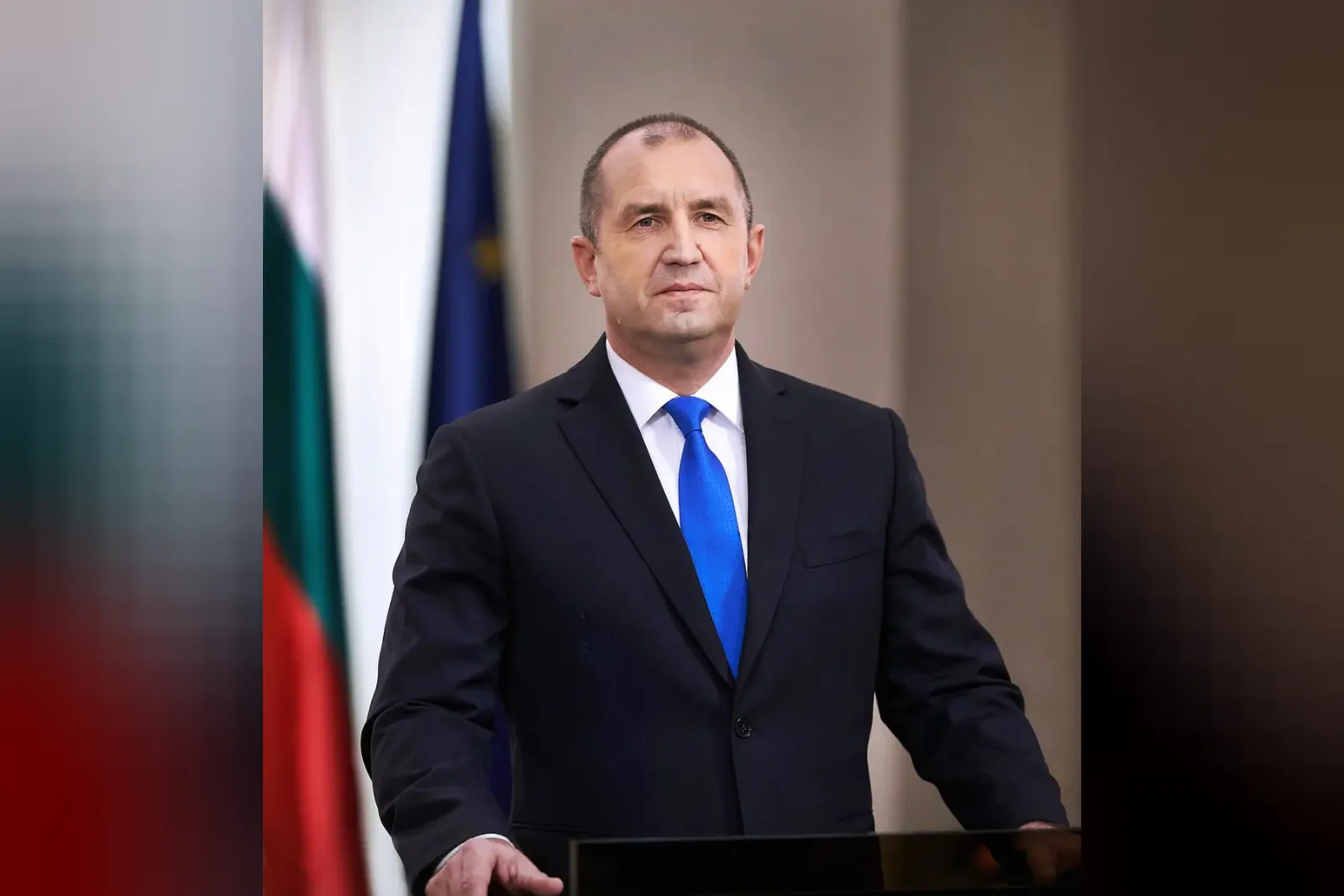
Bulgaria will pay into the European Peace Facility (EPF) for Ukraine only for measures that have nothing to do with new lethal weapons, the government says.
Sofia wants its money to go first to areas of Ukraine with a Bulgarian national minority. It is checking with the European Commission how this can be done.
The cabinet also approved a position of "constructive abstention" on measures to fund the purchase of new lethal weapons for Ukraine. A country that abstains constructively does not back a decision under the EU's common foreign and security policy, but does not block it.
The cabinet says non-military aid supports Ukraine's sovereignty and territorial integrity, and shows a wish to open diplomatic channels for talks. It says Bulgaria, as a Black Sea state, has a strategic interest in ending the war. Russia started it with its full-scale invasion in February 2022, close to Bulgaria's borders.
Ukrainian president Volodymyr Zelensky asked for an extra loan of 70bn at the European Council meeting, which ended on Friday. A day earlier, prime minister Rumen Radev spoke to journalists about the request.
Radev said: "How does this look to you, given everything that is happening in Europe? There is no way Bulgaria can be part of this 70bn."
The prime minister also noted that a decision was taken last year on a 90bn loan, which Europe guarantees.
The cabinet says all EU member states owe a financial contribution, and its size is worked out from gross domestic product. If required payments are not made, interest is due, and the country cannot get back money for aid it has already given.
The Council of the EU set up the EPF with a decision on 22 March 2021. It is an off-budget fund for military or defence projects under the common foreign and security policy. Earlier governments made Bulgaria's commitments under it.


Comments (0)
No comments yet.