
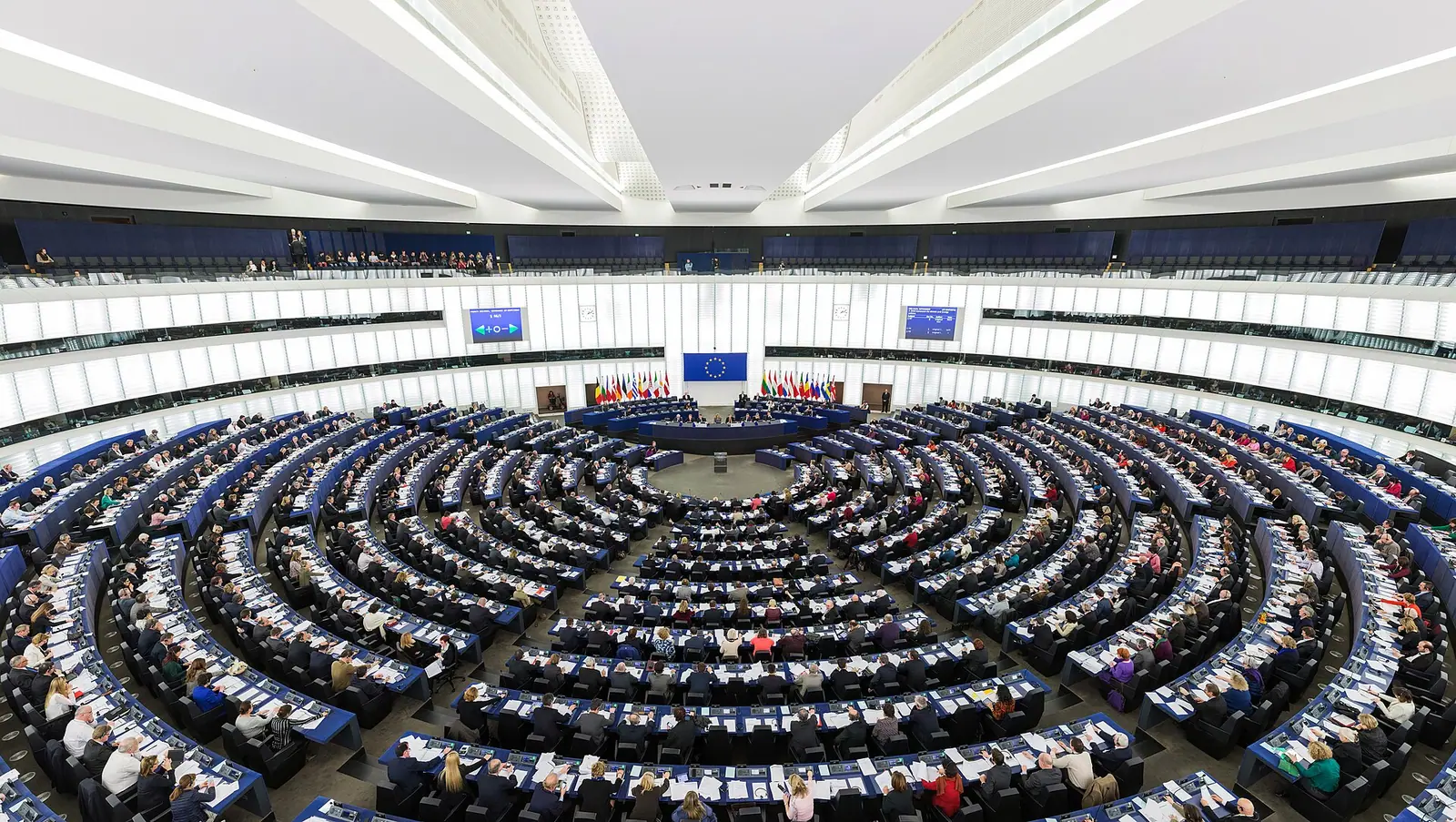
The European Parliament today discussed a rise in Russian attacks on shipping in the Black Sea. Bulgarian MEPs called for a mission to guard merchant ships, protection against drones, a maritime security centre in Varna and money for the affected ports.
Andrey Novakov of the European People's Party (EPP) urged the EU to send a mission to the Black Sea to guard merchant ships. He said it was clear where the trail of responsibility for the attacks led. Russia must take political responsibility and end the war it started against Ukraine in February 2022, he said. The problem facing Varna, Bulgaria and Romania is a problem for all of Europe, he said. The mission aims to secure fuel and goods at normal prices, not to escalate, he added.
Elena Yoncheva of the European Conservatives and Reformists (ECR) said European farmers must not pay with their livelihoods. She asked the European Commission to set up a special guarantee fund urgently to compensate the affected sectors on the western Black Sea coast. She also wants a fund for the ports of Varna, Burgas and Constanta, to pay for safety and spare equipment.
Her third demand is a system to protect undersea cables, pipelines and energy links, and to restore them quickly.
Kristian Vigenin of the Progressive Alliance of Socialists and Democrats said civilian ships are being attacked systematically and innocent sailors are losing their lives. "Russia's war against Ukraine has reached our shore," he said. He said the war must not swallow the Black Sea and turn it into a new war zone.
Vigenin wants more sea and satellite monitoring, early warning and anti-drone systems, protection for ships and crews, a faster launch of the centre in Varna with European support, and diplomatic efforts to stop the attacks. He said security will not come from more weapons alone.
Ilhan Kyuchyuk of Renew Europe asked for support for Bulgaria and Romania, a faster launch of the EU maritime security centre and help with anti-drone systems. He also wants joint monitoring and patrols with countries in the region, including NATO and Turkey, diplomatic pressure for a moratorium on attacks on civilian ships and grain facilities, and financial support. He said the security of the Black Sea is an inseparable part of EU security.
Nikola Minchev, also of Renew Europe, called on leaders to name Russia as the aggressor. He said Europe must invest in its joint defence more than ever, and member states must take an active part. Europe must defend the idea of a just peace and stand up to talk of peace through surrender, he said.
Taner Kabilov of the ECR said the Black Sea is a yardstick of the EU's ability to defend its interests. He said Europe must act together, firmly and in step with NATO, and the capabilities planned under the anti-drone initiative must start work without needless delay.
Andrey Kovatchev of the EPP said Russian strikes have already cost lives and hit the trade and bread of millions of people around the world. He called the Bulgarian government's stance of avoiding naming Russia clearly as the source of the attacks naive and dangerous. Kovatchev wants a stronger NATO presence, closer European defence cooperation, and an active role for Bulgaria and Romania in the schemes to raise more money for European defence capabilities.
Eva Maydell of the EPP said there is no room for hesitation in the face of Russia's hostile action off the coasts of Bulgaria and Romania. She said the EU and NATO must at once strengthen the protection of sea and air space and show resolve. "Only with our joint resolve can we force (Russian president Vladimir) Putin to negotiate for peace," she added.
Stanislav Stoyanov of Europe of Sovereign Nations called for talks on a lasting peace with Russia, which began its full-scale war against Ukraine in February 2022. He said it is in the interest of Bulgaria and Europe for the Black Sea to be a region of peace, trade and cooperation, and that Europe needs diplomacy, not a bigger war. A direct clash with a nuclear power could lead to a nuclear winter, he warned.
Stoyanov invited Kaja Kallas, the EU's top diplomat, and European Commission president Ursula von der Leyen to Varna. He wants them to explain how a policy of peace through strength will bring peace. He also asked how many more sanctions packages against Russia will be needed, even though it was Russia that started the war and is hitting civilian ships in the Black Sea.

Comments (0)
No comments yet.