
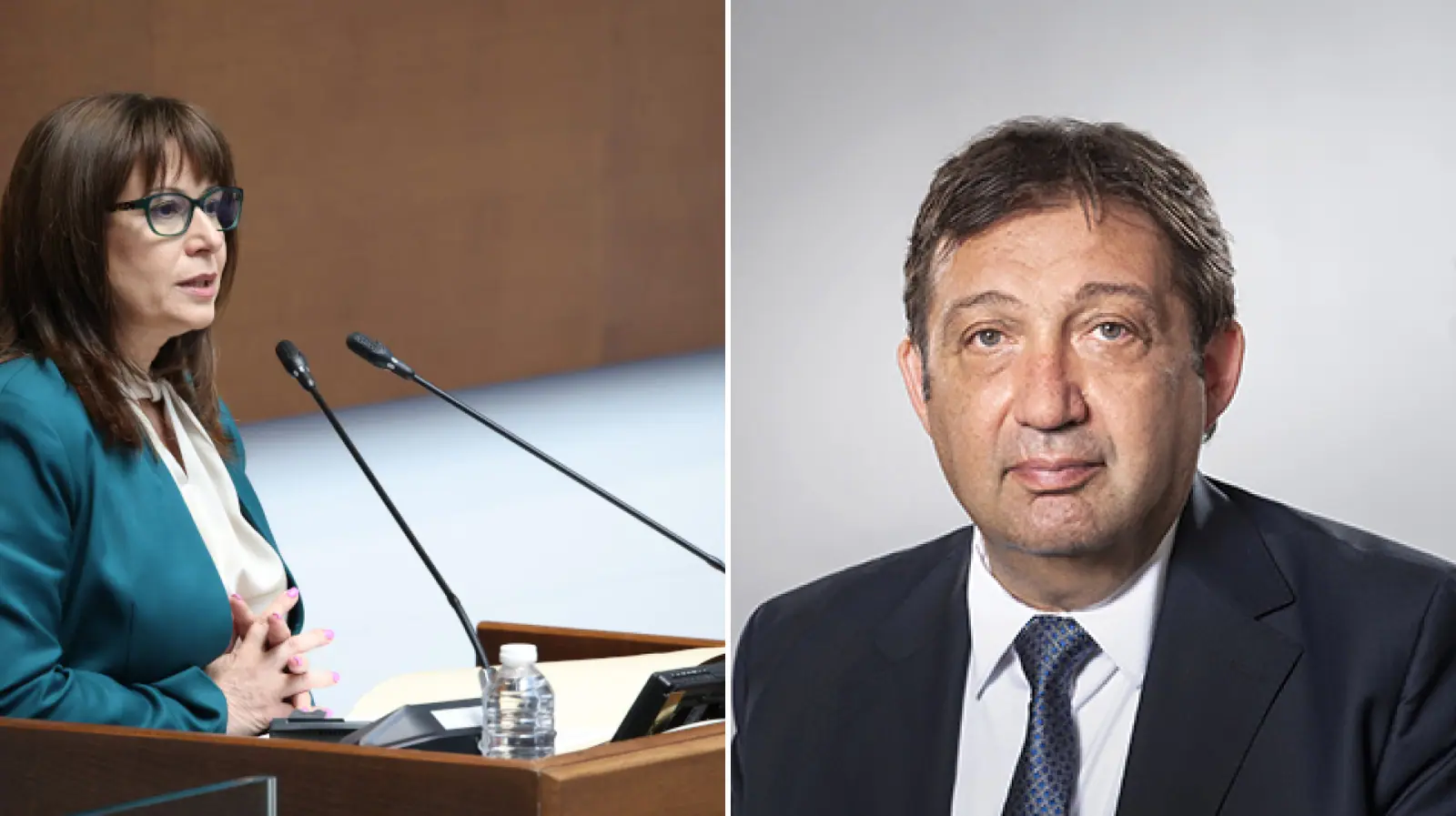
Ombudsman Velislava Delcheva has submitted an opinion to the Minister of Regional Development and Public Works, Ivan Shishkov. In it, she proposes amendments to Ordinance No. 4 of 2004. The goal is to ensure stronger protection for water and sewerage (W&S) service users. The information was released by the press center of the Institution of the Ombudsman. The document was prompted by received complaints, as well as systemic issues identified during inspections regarding billing, water regimes, the provision of drinking water, and the oversight of W&S operators.
The opinion proposes guaranteeing the reliability of self-reporting and updating data regarding the number of inhabitants. It also calls for clear rules for commercial premises. Sanctions are envisioned for when W&S operators fail to fulfill their obligations.
The Ombudsman noted that the issue of water distribution for "general consumption" in multi-family residential buildings is particularly acute. Currently, law-abiding citizens are paying for the costs incurred by non-compliant users. The reasons include missing water meters and the inability to provide access for reading. Inaccurate data in self-reporting and regarding the number of inhabitants also pose a problem.
Delcheva insists on a "fairer distribution mechanism, where the failure to meet regulatory obligations does not lead to adverse financial consequences for law-abiding consumers".
Separate attention in the opinion is given to water regimes. The Ombudsman points out that, in practice, there are cases where water supply is restricted without an official order being issued and without people being informed of the reasons or the schedule. Therefore, Delcheva recommends "providing criteria for 'drying up' and for 'severe reduction in water source flow,' as well as an obligation for local mayors to issue official orders".
Among the recommendations is the right of people to receive drinking water when the water supply is interrupted for an extended period. "Given the social significance of the issue, I believe that Art. 41, para. 6 of Ordinance No. 4 should be clarified, and special protection for vulnerable population groups should be provided," writes the Ombudsman.
As an example, Delcheva points to the village of Rogachevo in Balchik Municipality. Complainants claim that there was no water there for more than 20 days during August this year. The municipality stated that it does not have a water tanker for delivering drinking water.
The Ombudsman also insists on consumer protection when disputes arise regarding the accuracy of water meters. "In this regard, it is necessary for Ordinance No. 4 to provide an obligation for W&S operators to store the water meters they have dismantled for a specific period," she writes.
Regarding the topic of remote water meter reading, Delcheva warns that consumers are paying twice for the same service. She insists that the transfer of data from remote readings between heat accountants and W&S operators should be free of charge for citizens. The Ombudsman describes the lack of a clear control mechanism and administrative liability for violations of Ordinance No. 4 as a "particularly significant regulatory omission".
"In view of the above, I believe there are sufficient grounds for the Ministry of Regional Development and Public Works to take action to amend and supplement Ordinance No. 4/2004 on the terms and procedures for connecting consumers to W&S systems," writes Delcheva.
In June, the Minister of Regional Development and Public Works, Ivan Shishkov, stated that an in-depth debate on the state of the W&S sector is only just beginning, as there are many settlements facing severe problems.


Коментари (0)
Все още няма коментари.