
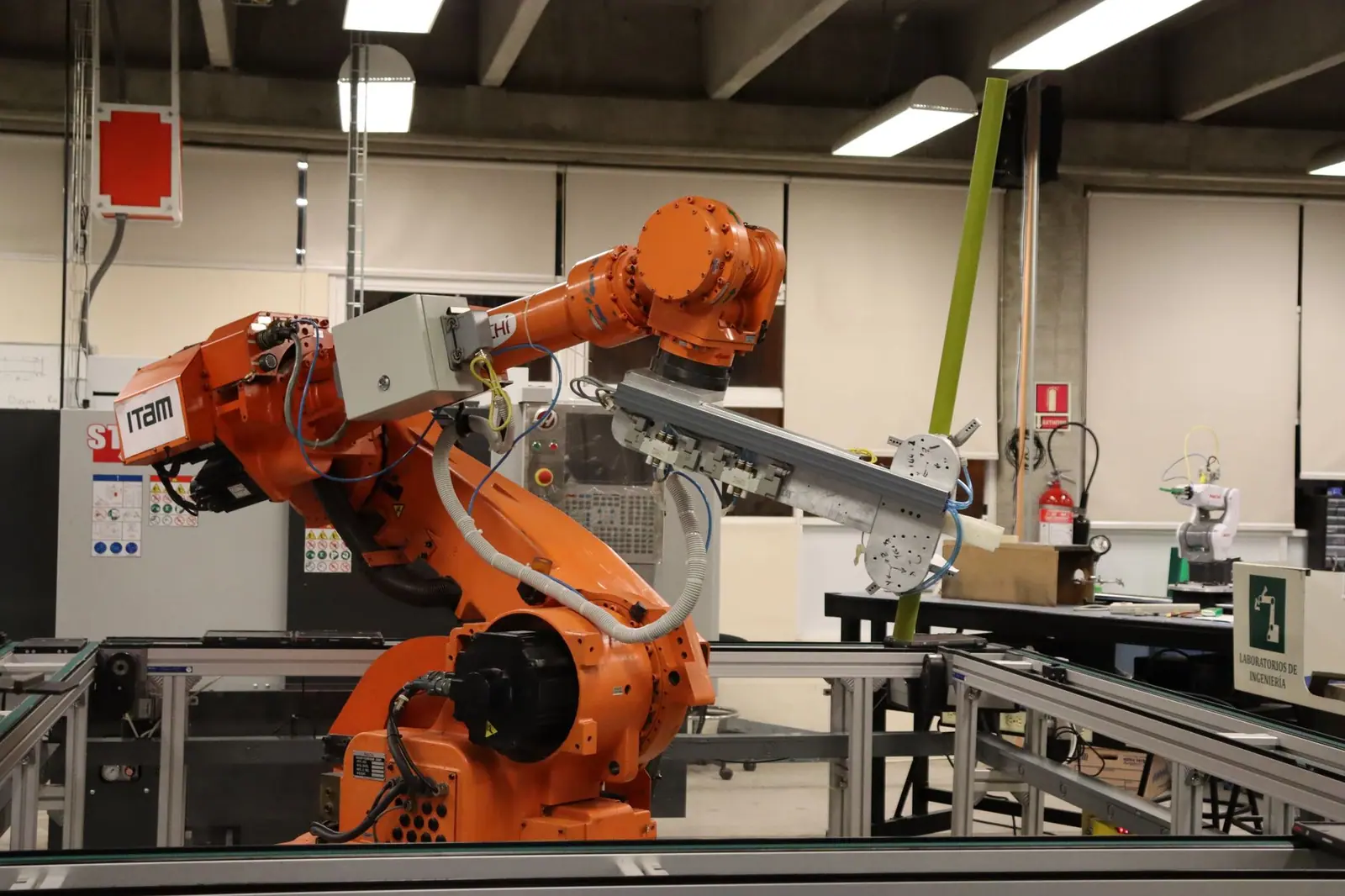
NVIDIA and INSAIT, an institute at Sofia University "St. Kliment Ohridski", have built a platform called LADDER that compares leading artificial intelligence models at controlling robots, the Ministry of Education and Science press office said. It tests how well the models handle a series of steps in a row.
On the hardest tasks, which have 8 to 10 steps in a row, even the best models succeed in about a third of cases. The first results show they are far from controlling robots reliably.
GPT-6 Astra, Claude Opus 5.5 and Gemini 4 Argon top the ranking. They do better than the rest, but many tasks still go unfinished.
Models built specially for robots struggle even more. One of the leading ones can move a single object, but with five or more steps in a row it almost never gets the job done.
Moving one object is fairly easy, but errors become more likely when several objects are moved one after another. That is why clearing a table or arranging objects remains a hard scientific problem, even though AI can solve complex maths tasks.
The study also looks at cost. With some of the most powerful models, one successfully completed task costs more than $6 on average. A full test of one model, with nearly 2,000 attempts, costs about $8,000.
LADDER focuses on physical AI, which acts in the real world rather than just processing information. INSAIT developed it, and NVIDIA saw its potential and joined the work.
The ministry says the cooperation with NVIDIA is a recognition of INSAIT's scientific potential and its place among international research centres. It believes LADDER could become a benchmark for progress in robotics and for the next generations of intelligent robots.
The platform is available at ladderrobotics.ai, which has a ranking, videos of the tasks being carried out and the full study. Results for new models will be added.
INSAIT is a unit of Sofia University, set up in partnership with Switzerland's ETH Zurich and EPFL. Leading scientists from universities and labs in the US, Europe and Israel run and advise the institute.
On 23 October, Google announced a new donation of $1m to INSAIT. It came during a meeting between Prime Minister Rumen Radev and company representatives, Sofia University said on its website. Google's total support for the institute is over $7m, and the university says this scale is unprecedented for Bulgaria and the region.



Comments (0)
No comments yet.