
Bulgaria is doing too little to fight climate change, and droughts and heatwaves already kill thousands of people a year and cause over 1 billion euros in direct losses, a new report says. That's about 1% of the country's gross domestic product for 2025, or roughly 140 euros per person. The figures come from a study called "Vulnerability to and Impacts of Climate Change in Bulgaria: A Joint National Assessment", coordinated by the Net-Zero Lab at Sofia University's Faculty of Economics and Business Administration.
A team of scientists from different fields is behind the report, and its findings were shared with BTA. Heatwaves, droughts and flash floods are no longer one-off events, the authors warn — they are a sign that the climate is changing for good.
On the 2025 Climate Change Performance Index, which measures how well countries fight climate change, Bulgaria ranks 50th out of 64 countries. It scores poorly on cutting greenhouse gas emissions, very poorly on climate policy and energy use, and only average on the share of renewable energy.
Bulgaria is warming faster than the world average, the report says. The country sits in the climate "hot spot" of southeast Europe: the average yearly temperature for 1991-2020 is about 0.8 degrees higher than for 1961-1990, with the warming showing up most in northern Bulgaria and in summer.
Hot days and nights now number between 10 and 20 a year, but by the end of the century that could rise to 50-60, whichever way emissions go. Under the worst-case, high-emissions scenario, the average yearly temperature in Bulgaria will reach about 14.1 degrees by the end of the century — as warm as the hottest southern regions are today. In effect, the climate of the whole country will "shift" several hundred kilometres south, the team explains.
Total rainfall is staying roughly the same, but the pattern is changing. Light and moderate rain is becoming rarer, while heavy and dangerous downpours are becoming more common. Along the Black Sea coast and in eastern Bulgaria, extreme rainfall has jumped by 60-75% since 1991.
A new seasonal pattern is taking shape — dry summers with rain concentrated in autumn — and it's behind the growing number of flash floods. The floods in the Karlovo area in 2022, in Tsarevo in 2023 and 2025, and in Elenite in 2025 essentially confirm what the models predicted, the scientists say.
Heat is one of the leading — but underrated — causes of excess deaths in Bulgaria, which is among the hardest-hit countries in Europe. In 2023, heat was linked to 1,670 deaths — 229 per million people, the second-highest rate in Europe. In 2024, heat-related deaths jumped to 3,414.
Heat deaths among people over 65 have risen by more than 150% compared with 1990-2000. Women and people over 80 are hit hardest, the report's authors note.
Cities make these risks worse. In Sofia, summers run 2.5 degrees hotter on average than in the surrounding countryside, and that extra heat alone causes about 95 additional deaths each season.
77% of people in Sofia don't have enough access to green space, and trees cover just over 10% of the city. According to the World Health Organization, if tree cover reached 30%, summer deaths could fall by around 40%, the team says.
If emissions keep rising, heat-related deaths could reach 3,463 a year between 2071 and 2099, up from about 1,150 now. If emissions are cut, that rise would be held to around 1,742 deaths a year, the report's calculations show.
Climate change is already taking a real toll on Bulgaria's economy. The reason is direct damage from droughts, heat, floods and fires. There's also a longer-term drag on productivity, public finances, roads and other infrastructure, energy supply and people's wallets.
The European Environment Agency has calculated Bulgaria's climate-related losses. Without extra steps to adapt, Bulgaria could lose between 1% of its GDP under a milder scenario and 3.5% under a worse one by 2050.
Insurance against climate risks covers less than 50% of the damage. The number of policies has grown over the past two decades, but independent estimates suggest only about 8% of households actually have such cover.
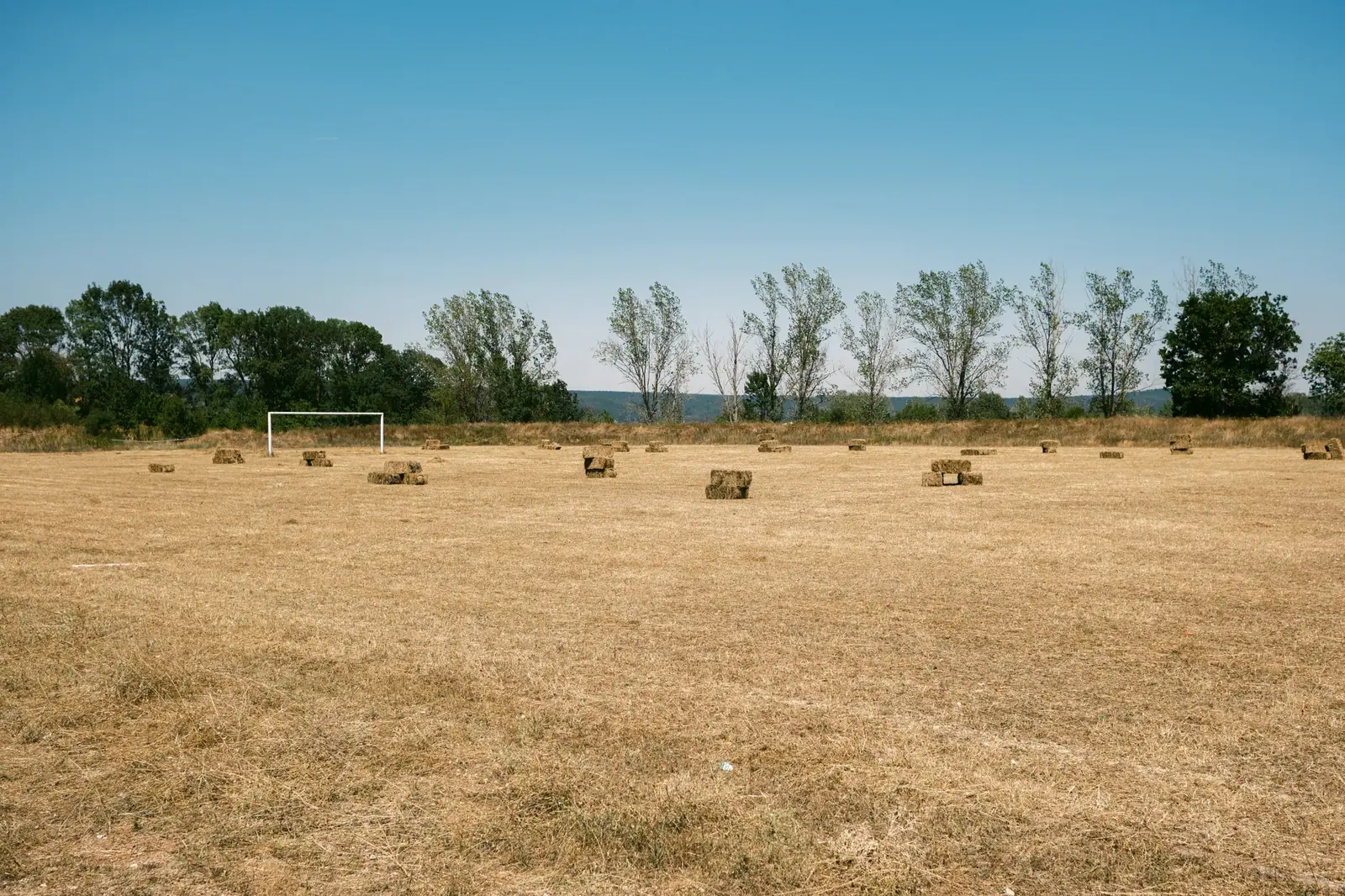
Farming, forests and water supplies are also under growing strain. Models show that after 2037, the number of drought days will rise from 50-60 to 70-80 or more, hitting the Plovdiv, Yambol, Sandanski and Ruse areas hardest.
In Dobrudja, often called Bulgaria's breadbasket, the problem isn't so much gradual warming as the sharply growing swings from one year to the next, plus poor soil moisture recharge over winter.
In forests, annual growth could drop by up to 3.5 million cubic metres — equal to 42% of the yearly harvest. More than 60% of forest habitats in the Natura 2000 network are already in poor condition, and shelterbelts in northeastern Bulgaria are deteriorating because of drought, weakening their protective role too.
The report's main conclusion: Bulgaria has formally aligned its climate policies with EU rules, but struggles to put them into practice. The scientists point to a lack of long-term vision, inconsistent politics, weak administrative capacity and heavy reliance on project-based and EU funding as the main problems.
On top of that, Bulgaria has no national register of climate-related damage, money to deal with the fallout only comes after the damage is done, and climate risks are barely factored into state budget planning. The issue matters even more now that Bulgaria joined the eurozone on 1 January 2026.
The report is the result of a joint assessment of Bulgaria's climate vulnerabilities and impacts, carried out by a team of scientists from the country's leading research institutions: the National Institute of Meteorology and Hydrology, the Institute of Biodiversity and Ecosystem Research at the Bulgarian Academy of Sciences, Sofia University "St. Kliment Ohridski", the National Center of Public Health and Analyses, and the Technical University of Sofia.
It's the first time findings from these institutions have been brought together in one study that looks at the full picture of how climate change is affecting nature, the economy and people's health in Bulgaria.

Коментари (0)
Все още няма коментари.