
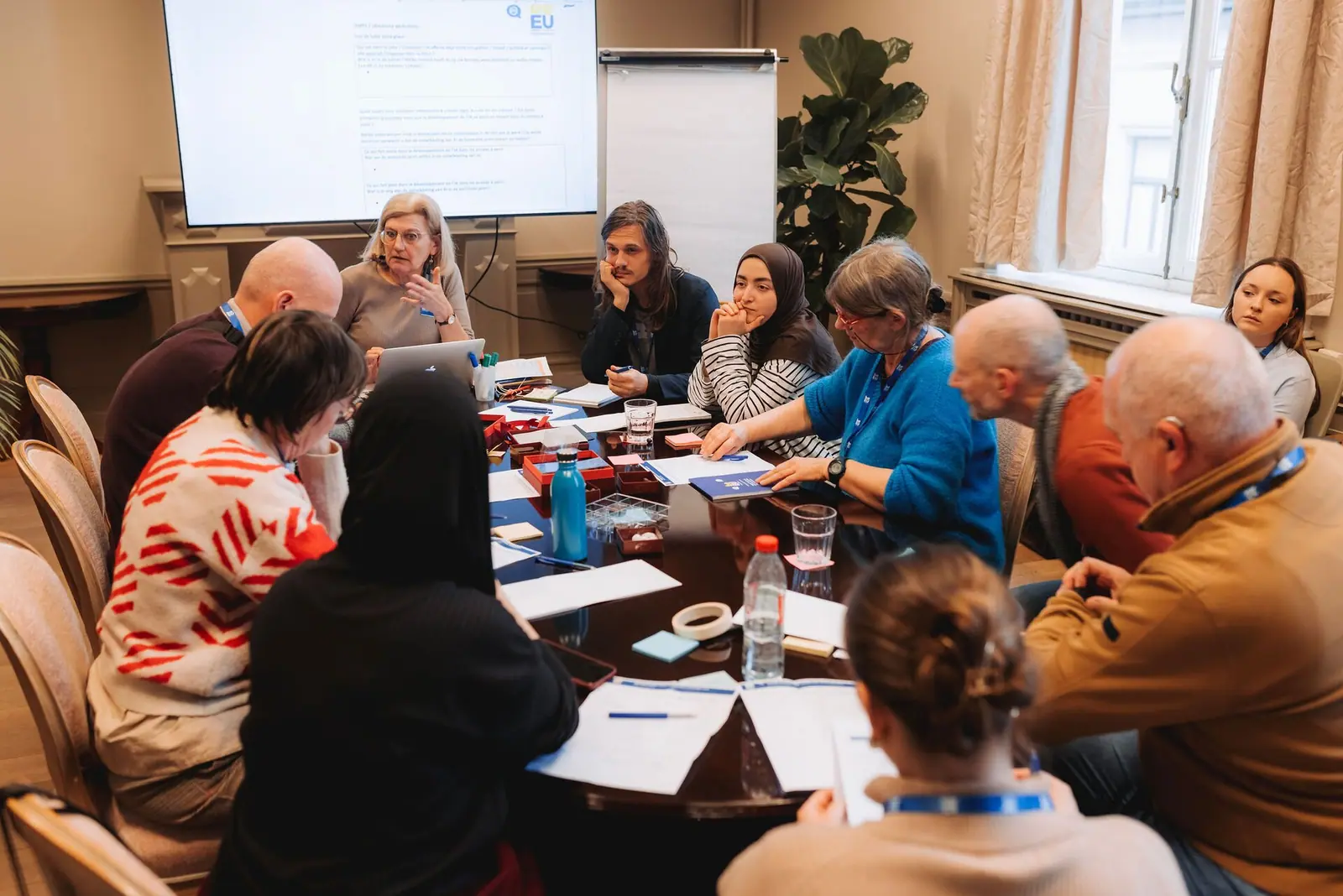
Four Bulgarians – Gabriela Karadzhonova-Malcheva (born in Lyubimets, working in Plovdiv), Stefan Rusev from Ivaylovgrad, Mihaela Koleva from Yambol, and Aleksandar Kolev from Stara Zagora – are participating in the European Citizens' Panel to formulate specific recommendations for the European Commission. These citizens, selected by lottery, have the opportunity to participate directly in the discussion of European policies.
Yesterday, September 19, the Bulgarian representatives participated in focus group sessions at the Albert Borшет Congress Centre in Brussels. There, alongside participants from Germany, Italy, the Czech Republic, and other countries, they shared their personal experiences and perspectives regarding various aspects of democratic resilience.
At the heart of the discussions in Brussels were issues related to how people receive and evaluate information, as well as the level of trust in institutions and public debate. Discussions covered opportunities for participation in decision-making and whether citizens feel heard by local, national, and European authorities. According to the European Commission's definition, democratic resilience is the ability of democratic institutions, civil society, communities, and citizens themselves to prepare for, withstand, and recover from threats and crises. In this process, it is essential to preserve free elections, fundamental rights, the rule of law, and the opportunity to participate in public life.
The first session of the panel concludes today, which will end with a summary of the views of 150 citizens from all 27 EU Member States. Over the past two days, participants have discussed how European democracies can become more resilient and how citizens can become more actively involved in public life. During today's meetings, the main challenges that the panel should focus on in the future will be defined, while also examining the concept of "democratic resilience" itself and its significance in everyday life.
The first session is key for the participants, as it allows them to compare their experiences and exchange viewpoints beyond national borders. The panel's work will continue in October with a second session, which will be held online from October 16 to 18. During this session, participants will build on the current discussions and discuss specific actions to strengthen societal resilience and ensure more meaningful participation in democratic life, while simultaneously beginning to develop recommendations based on the identified priorities.
The process will conclude in November with a final session in Brussels. At that time, all discussions will be summarized, and ideas will be refined into final recommendations for the European Commission. These documents will serve the Commission's subsequent work in strengthening democracy in the EU within the framework of the European Democracy Shield.

Коментари (0)
Все още няма коментари.