
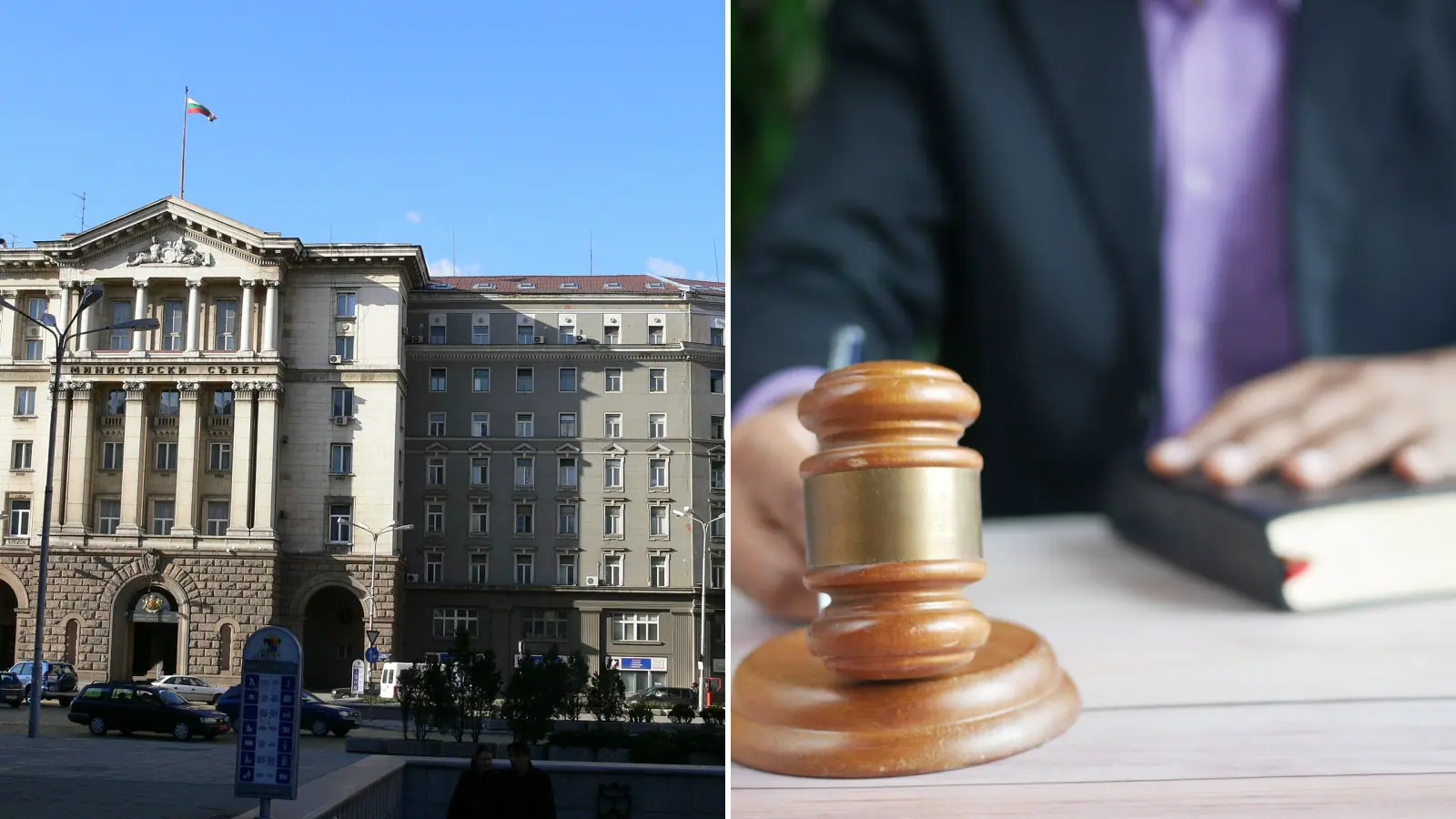
Bulgaria's Constitutional Court has ruled that changes to the Labour Code and the Judiciary Act, made through the final provisions of the 2026 budget law, are unconstitutional, its press office said. The court rejected a request to declare the whole budget law unconstitutional.
Article 355, paragraphs 1–4 of the Labour Code "freezes" the minimum wage and changes how length of service is counted. Article 218, paragraph 2 of the Judiciary Act ties the pay of junior magistrates to the pay of MPs.
The ruling covers constitutional case 15 and the linked cases 17 and 18. MPs from the 52nd National Assembly and the ombudsman took the cases to the court. It also turned down a request to declare §46 of the final provisions of the same law unconstitutional.
On the Labour Code, the court found that the change has no direct link to revenue and spending in the 2026 state budget.
Its reasons on the Judiciary Act were different. The court accepted that the change serves a general aim and was made by law. But it takes effect on 31 July 2026 and permanently changes how pay for judges, prosecutors and investigators is set. That goes beyond the link the law allows with the 2026 budget law.
The court also said the change breaks Article 133 of the Constitution, which requires a stable status for judges, prosecutors and investigators.
A panel of 11 constitutional judges heard the cases. Four of them signed dissenting opinions on Article 355, paragraphs 1–4 of the Labour Code: Atanas Semov, Yanaki Stoilov, Sasho Penov and Nevin Feti. Orlin Kolev has a dissenting opinion on Article 218, paragraph 2 of the Judiciary Act. Kolev also filed opinions on the Labour Code, as did Semov, Stoilov, Penov, Feti and Galina Toneva on the Judiciary Act.






Comments (0)
No comments yet.