
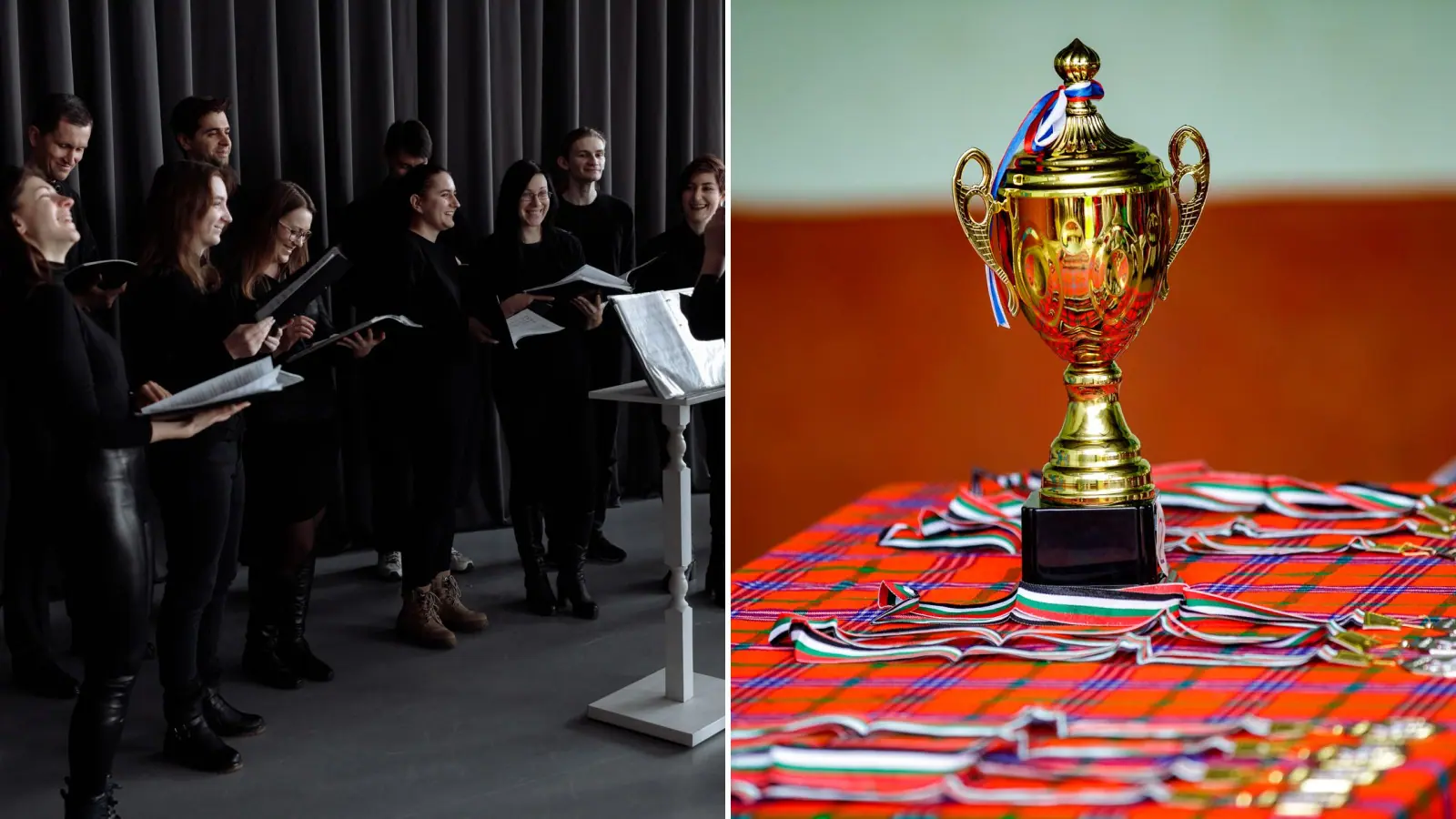
The Bulgarian Choral Union marks its 100th anniversary on 14 November in Sofia with a ceremony, an exhibition and a gala concert, its chair Elena Shopova told BTA. The union will bring back its awards at the concert.
At 11:00 am, a commemorative stamp, "100 Years of the Bulgarian Choral Union", comes out at the Lyubomir Pipkov National School of Music. At 5:30 pm, the exhibition "100 Years Together in Song" opens in the Marble Foyer gallery of Bulgaria Hall. The concert starts at 7:00 pm in the main hall.
At the concert, the union will give awards to choirs and individual members. It will also present a plaque to conductors who have contributed to choral art, and an award to a benefactor of the organisation.
The union now has 65 choirs and 25 individual members. Around 200 choirs have worked in Bulgaria over the years.
The union was founded in 1926 on an idea by composer Dobri Hristov. The decision to set it up was taken in Vratsa on 1 and 2 June, and the founding congress was held in Sofia on 2 and 3 October.
It was first called the Union of Folk Choirs, and the first groups mostly sang arrangements of folk songs. In 1935 it was renamed the Bulgarian Singing Union. Its work stopped during the Second World War.
In 1990 a group of conductors revived the union. They included Prof Vasil Arnaudov, Academician Valentin Bobevski, Prof Hristo Arishtirov and Prof Georgi Robev. The union took the name Bulgarian Choral Union.
Shopova has been chair since February 2026. She has sat on the Management Board since 2018 and has been its secretary since 2021. Since 1996 she has been principal conductor of the Orpheus children's choir in Haskovo, where she was second conductor from 1989.
She founded the National Festival of the Christmas and New Year Song in Haskovo and is its music director. She is also one of the founders of the Children's Choir of Bulgaria. Orpheus has won prizes at competitions in Preveza, Moscow, Plovdiv, Panagyurishte, Nessebar, Sofia, Vienna, Daugavpils and Beijing.
Shopova says the union should present Bulgarian choirs on the international stage, give them a chance to swap experience and keep traditions alive. Membership of the European Choral Association helps Bulgarian groups make international contacts and keep up with current trends.
The union's mission has changed, she explained. At first its task was to support choral work and give methodical help to young conductors. Today it is to present Bulgarian choirs abroad and share professional experience.
School choirs are getting harder to set up, while small vocal groups and pop singing are growing. Children's and youth choirs still win international prizes. They include the vocal ensemble Fortissimo, the vocal group Morski Pesachinki from Burgas and the youth choir Ohana from Sofia.
Shopova believes choral art is no longer elitist. "Besides classical works, the groups sing pop, jazz and rock, folk arrangements and musicals. More and more often, singing is combined with dance and stage performance," she said.
She says singing in a choir builds discipline, teaches people to pay attention to others and to work for a shared result. Taking part in events abroad lets young people meet different cultures and widen their knowledge.
The union's projects include the "Bulgaria Sings" campaign, running since 2016, and the Children's Choir of Bulgaria project with more than 600 singers. They also include the "Big Choir of Bulgaria", which performed Beethoven's Ninth Symphony, and the annual Panorama of Bulgarian Choral Art.
The union also runs workshops with foreign specialists, among them a Greek stage director and conductor Peter Broadbent. In September in Plovdiv, choirs worked with Broadbent on modern repertoire and ways of running rehearsals.
New projects such as the festival in Haskovo let Bulgarian composers work with conductors and write to suit the needs of the choirs. Bulgaria has many choir festivals, and the union cannot back them all, Shopova explained. Organisers apply for funding to the National Culture Fund and the Ministry of Culture, and a large share of them get it.
For the next century, Shopova wants the union to keep growing, present Bulgarian choral art around the world and protect national traditions, making them accessible and close to young people.



Comments (0)
No comments yet.