
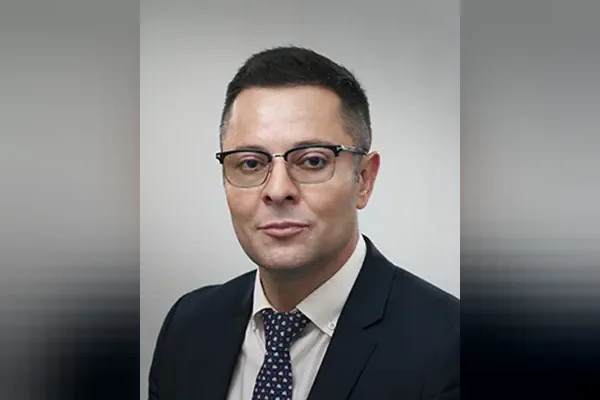
Bulgaria's deputy prime minister and economy minister Alexander Pulev has laid out plans to cut red tape for businesses, the economy ministry said after he met a delegation from the International Monetary Fund.
"We want shorter deadlines, less regulatory weight and a more efficient administration," Pulev said, adding that this would make the environment more predictable and more competitive for investors.
Pulev said the economy ministry now handles investment work, and a central coordination unit already runs under the Council of Ministers, bringing together the institutions involved in major strategic investment projects.
The talks also covered wider administrative reform the ministry is carrying out with businesses, industry groups, chambers of commerce and other interested parties. The two sides discussed public-private partnerships, which can draw in private capital and build infrastructure, and talked about working with the European Bank for Reconstruction and Development to prepare projects.
They also discussed a national program to support industrial zones, and plans to speed up digital technology in state administration and in small and medium-sized businesses.
Pulev named energy and transport infrastructure among the priorities, saying investment there could open the way for bigger production and new investors.
Fabian Bornhorst, who heads the IMF mission, said steps to improve the business climate and boost competitiveness matter for fixing structural problems in Bulgaria's economy. He pointed to energy, saying Bulgaria needs to use it more efficiently and to back industry through the changes ahead.
The ministry said the meeting also touched on the importance of political stability and a predictable environment for investment and long-term business planning.
The IMF delegation is in Sofia from September 28 to October 2. Earlier this week, Pulev said he expects the IMF's assessment of Bulgaria to be balanced and constructive.


Comments (0)
No comments yet.