
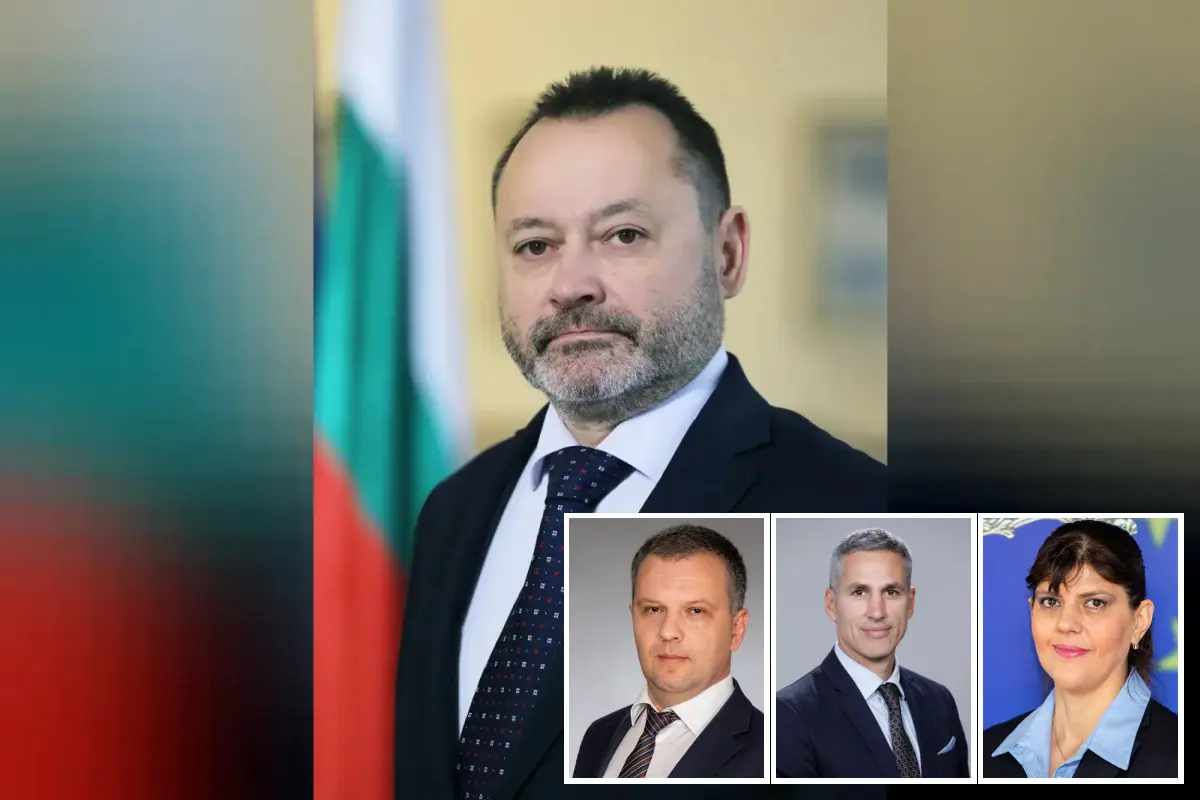
Bulgaria's justice ministry has launched a new search for three Bulgarian candidates to become a European prosecutor. Justice minister Nikolay Naydenov ordered the process, with applications due by 5:30pm on 12 October.
Applicants can drop off their papers at the ministry's public service centre, email them in, or file them through the secure e-delivery system run by the ministry of innovation and digital transformation.
Selection happens in two stages. A panel will first check the paperwork to see who qualifies, then hold public hearings streamed online.
Five people sit on the panel: a senior law professor who teaches criminal law or criminal procedure, two criminal judges from the Supreme Court of Cassation, and two prosecutors from the Supreme Cassation Prosecutor's Office. No one from the justice ministry sits on the panel, which adds an extra layer of independence.
Candidates must be sitting judges, prosecutors or investigators with at least 12 years of legal experience. They also need hands-on experience in financial investigations and cross-border judicial cooperation on criminal cases. Candidates must speak English at B2 level or higher and be independent beyond doubt. They also have to meet the skills the job requires and fit the EU's age rules.
The panel will pick three names and send them to the minister, who will put them to the cabinet for approval. The Council of the EU will then choose one of the three and appoint them as a prosecutor at the European Public Prosecutor's Office. Under the rules of the office, each country in the closer cooperation scheme puts forward three candidates; 25 member states now take part.
The new process follows the scrapping of Cabinet Decision No. 50 of 21 January 2026, which had approved Dimitar Belichev, Mihaela Raydovska and Plamen Petkov as candidates. The caretaker cabinet led by Andrey Gyurov cancelled that decision and, in the same move, opened the new process, laying out its deadlines and rules.
Cabinet Decision No. 267 of 9 April 2026 put the justice minister in charge of running the selection. In June, Naydenov told parliament in a written reply that the deadlines set out in that decision for choosing a new European prosecutor could not be met.
At a meeting with Naydenov that same month, the EU's chief prosecutor, Laura Kövesi, said Bulgaria's pick for European prosecutor should not turn political and should be wrapped up as fast as possible under the current rules. Any delay in Bulgaria, she said, would hurt the work of the European Public Prosecutor's Office, the justice ministry's press office said.
Comments (0)
Все още няма коментари.