
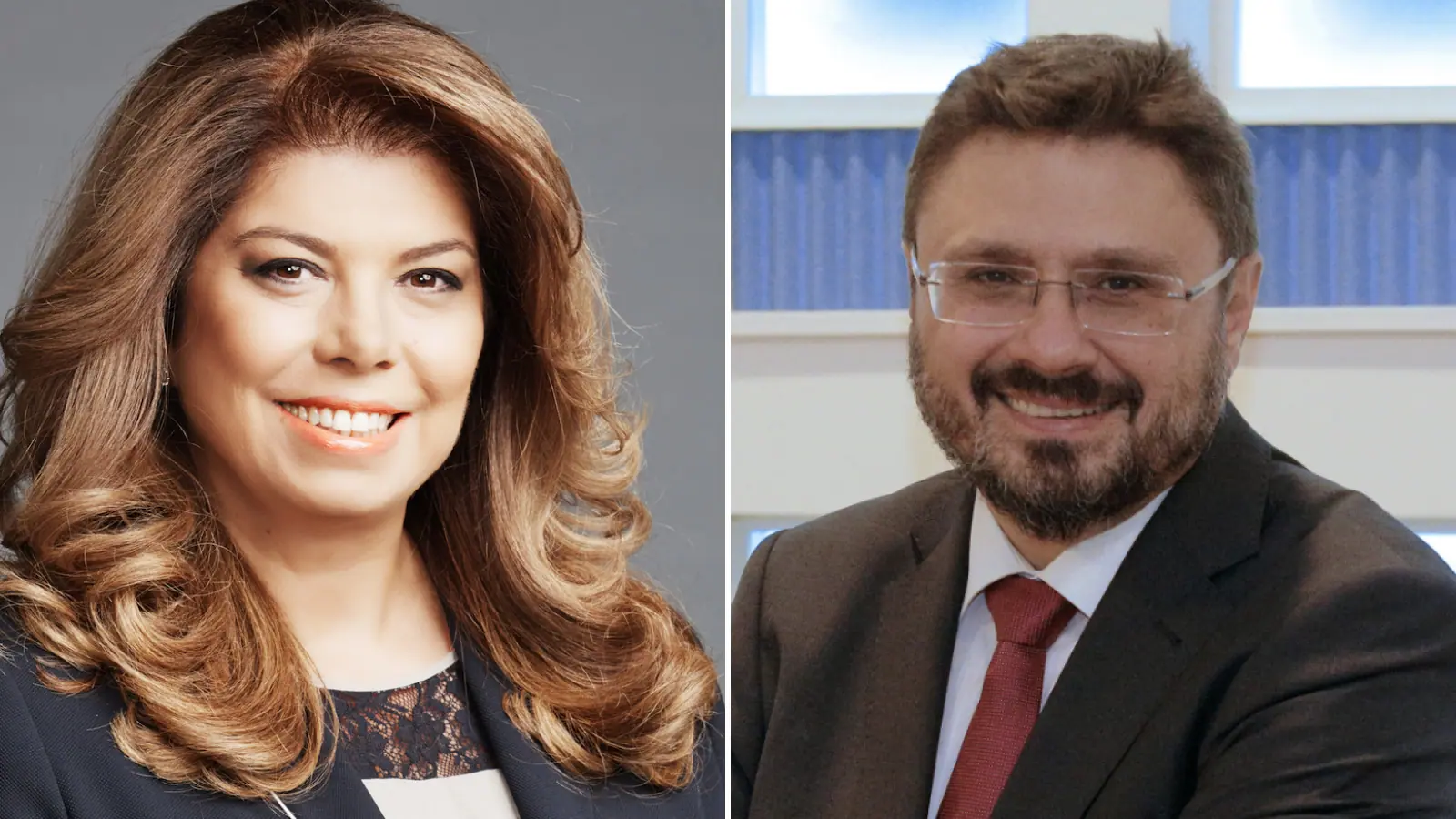
Iliana Yotova and Kiril Valchev lead the race for president, with 41.4% support among people who say they will vote on October 25, a poll by Market Links shows. Andrey Gyurov and Georgi Kandev come second with 21.9%.
Kostadin Kostadinov and Petar Volgin would get 6.4%, Ivelin Mihaylov and Yuliana Mateeva 3.9%, and Radostin Vasilev and Krasimir Manov 0.9%. Other tickets together take 3.7%, while 20.4% of would-be voters haven't picked a candidate yet.
Interest in the presidential vote is slightly lower than interest in a possible early parliamentary election. 46% say they are firmly set on voting for president, against 48% who say the same about a parliamentary vote. 12% say they definitely won't vote for president, compared with 9% who rule out voting in a parliamentary election.
In a hypothetical parliamentary vote, among people firmly set on voting, Progressive Bulgaria would win with 35%. GERB-SDS would get 10.3%, We Continue the Change 9.0%, Democratic Bulgaria 7.2%, Revival 5% and the DPS 4.5%. The share of people who haven't decided which party to back rose from 14% to 18%.
Prime minister Rumen Radev's trust rating stands at 44% in September, with 39% distrust, down from 50% trust and 33% distrust in July. Four months into office, his government gets 39% trust and 40% distrust, while parliament scores 18% trust against 59% distrust.
DPS leader Delyan Peevski still ranks lowest, with 6% trust and 89% distrust. DSB's Atanas Atanasov has 8% trust and 72% distrust, GERB leader Boyko Borisov 13% and 76%, and We Continue the Change leader Asen Vasilev 15% and 73%. Democratic Bulgaria's co-chairs Ivaylo Mirchev and Bozhidar Bozhanov each get 10% trust, with 66% and 61% distrust respectively. Kostadin Kostadinov has 18% trust and 65% distrust.
16% of those polled say the country is heading in the right direction, while 60% say it isn't. That's the worst reading since the early election in April. Pollsters say the mood has soured for a fourth month running, with the index back to mid-2025 levels, before the government had even been in office six months.
Pollsters say economic worries are growing mainly because people feel rising prices are squeezing their living standards. They say people are pinning much of the blame on the government, even though some know outside forces are also driving the situation.
The nationwide poll ran from September 22 to 29 among 1,006 people aged 18 and over, using face-to-face interviews and an online survey. It was funded jointly with a media partner.

Comments (0)
No comments yet.