
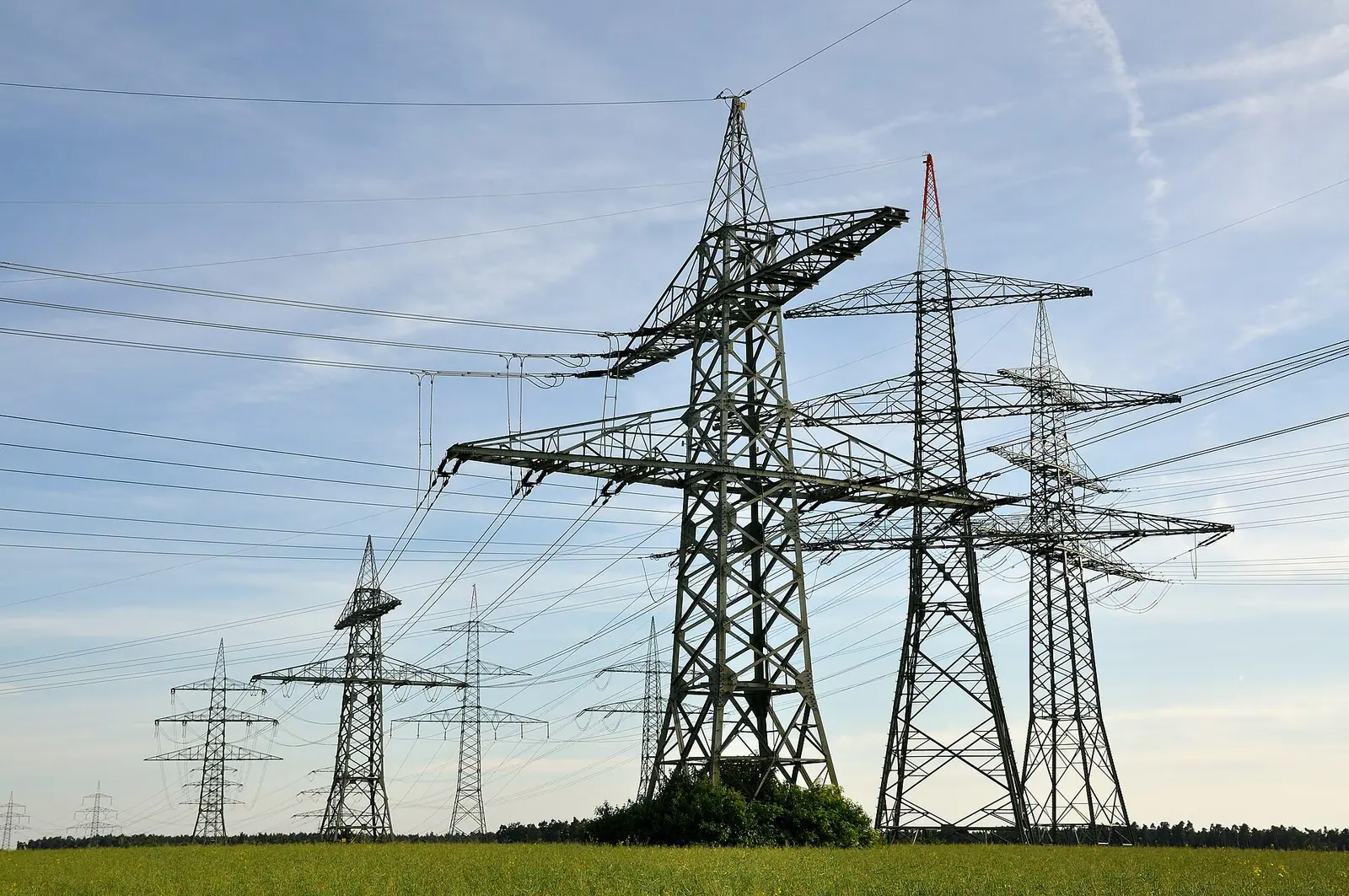
Bulgaria's grid operator ESO faced criticism today over its ten-year plan for the power transmission network. The criticism came at a public hearing at the energy regulator KEVR, from the distribution company Elektrorazpredelenie Yug (ER Yug) and from members of the commission. They say the plan for 2026–2035 again pays too little attention to the internal transmission grid and its links with the distribution networks.
ER Yug warned that without work on the grid, connecting new users is already getting harder around Plovdiv and in other industrial regions. Shteryu Radev, a representative of the company, said new investment is piling up in the same places. Demand for connections and new capacity is growing, but grid capacity falls short. Until recently the problems mainly hit new power plants. Lately they increasingly hit new consumers too.
"We believe ESO's approach of treating grid development as a sum of separate connection procedures is not sustainable," Radev said.
He said the sites on ER Yug's list are in the plan only as a formality and without any assessment. The transmission and distribution grids, he said, must be developed as a whole and in coordination. ER Yug has already sent ESO a detailed opinion and a list of sites.
KEVR chair Plamen Mladenovski and commission member Blagoy Golubarev said the plan was professionally prepared from a transmission point of view. But both shared ER Yug's criticism, as did Tasko Ermenkov, also a KEVR member. The commission called on ESO and the distribution companies to hold more productive talks with each other.
Other participants objected that ER Yug itself has no official plan for developing its distribution network, although it must have one. They said this is why the company's requests do not carry enough weight in the plan. The same criticism has been made in previous years.
Elektrorazpredelitelni Mrezhi Zapad backed the plan. Kristina Kotseva, a representative of the company, said ESO included the sites it proposed.
Maria Krasteva, operations director of the Bulgarian Wind Energy Association, said the 747 megawatts of wind capacity planned by 2035 fall short of the national targets of more than 2,000 megawatts of onshore wind plus offshore. She asked ESO for more openness and timely information on upcoming grid reconstruction work.
Ivan Stoyanov, deputy director of the central dispatch centre at ESO, said the plan meets the law and follows the National Integrated Energy and Climate Plan. He said the document sets out scenarios for power output and generation, for grid development, and for the difficulties in meeting connection duties, especially over the past two years with storage systems. Storage helps the system run, he said, but questions remain that need answers soon.
"At the moment we are among the leading operators in continental Europe for storage systems," Stoyanov said.
KEVR will adopt the plan at a closed meeting on 11 November this year.




Comments (0)
No comments yet.