
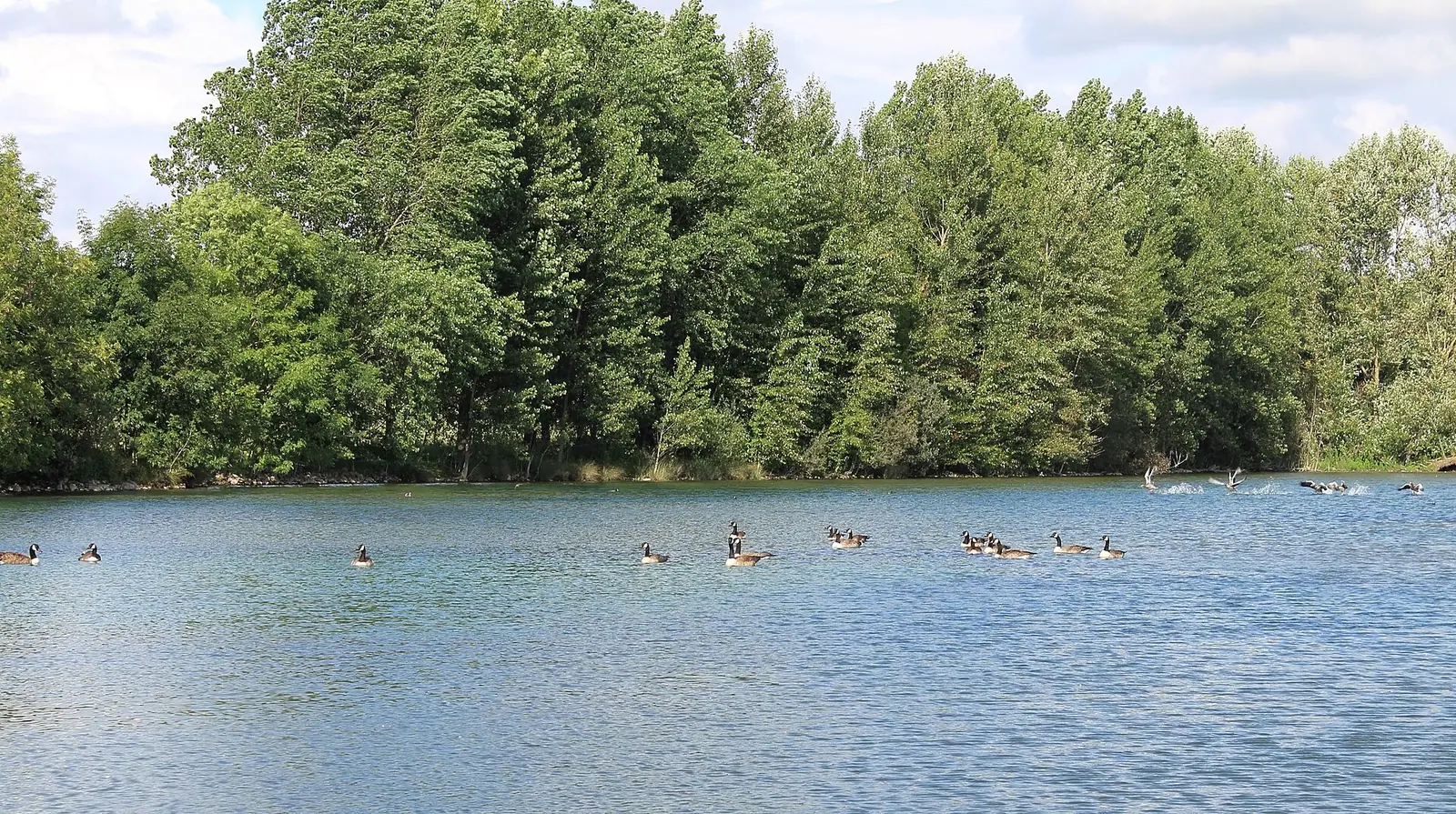
More than 150 people counted over 21,000 birds in Bulgaria during nine events held on October 3 and 4, the Bulgarian Society for the Protection of Birds (BSPB) said to mark European Bird Watch days. The counts in Bulgaria took place mainly in wetlands.
This report follows our earlier story on free entry at the Poda nature centre for European Bird Watch days.
The most-spotted species in Bulgaria was the ferruginous duck, with 6,701 birds counted, followed by the common starling with about 3,000 and the shelduck with 2,280. The society highlighted some rarer finds among the sightings, including black-throated diver, red-breasted flycatcher, white-backed woodpecker, osprey, Eurasian spoonbill, golden eagle and white-tailed eagle.
Elsewhere in Europe, bird watchers also logged many rare species. Finland recorded the most sightings on the continent, around 1.6 million, followed by Sweden with 742,877 and Hungary with 628,635. In both Sweden and Hungary, the most common species spotted were the greater white-fronted goose, the common starling and the chaffinch.
In Greece, watchers spotted more than 73 lesser white-fronted geese and three Egyptian vultures. The BSPB pointed to the mass migration of red-throated pipits as one highlight, while Richard's pipit and tawny pipit were seen in Belgium, Denmark and the Netherlands. Yellow-browed warblers were counted in Denmark, Switzerland and Malta, and in Italy observers spotted a Bonelli's eagle and a marbled duck. In Scandinavia, bird watchers also recorded species rarely seen in the region — cream-coloured courser and black-headed bunting.
In Turkey, observers recorded heavy migration of birds of prey, including 1,128 lesser spotted eagles, the BSPB said.





Comments (0)
No comments yet.